
Surname & cultural heritage
Peysson: an Occitan surname born by the water
The name Peysson is one of those surnames that carry within them the whole geography of a land and all the colour of a language. According to Albert Dauzat's Dictionnaire étymologique des noms de famille et prénoms de France (1951), Peysson is the Occitan form of Poisson (Fish), derived from the Occitan word peis ("fish").
Like many trade names that became surnames in the Middle Ages, Peysson originally designated a fishmonger, a fisherman or an inhabitant of a place known for its fish ponds. The name spread throughout south-eastern France — particularly in the Drôme, Ardèche, Rhône, Hautes-Alpes and Bouches-du-Rhône departments — and gave birth to a whole family of derivatives: Peyssonnier, Peyssonnel, Peyssonneau, Peyssonnerie… The surname appears under several similar spellings over the centuries — Peysson, Peyson, Peyssonnel — all stemming from the same southern root.
Anne-Marie Peysson, the grande dame of RTL
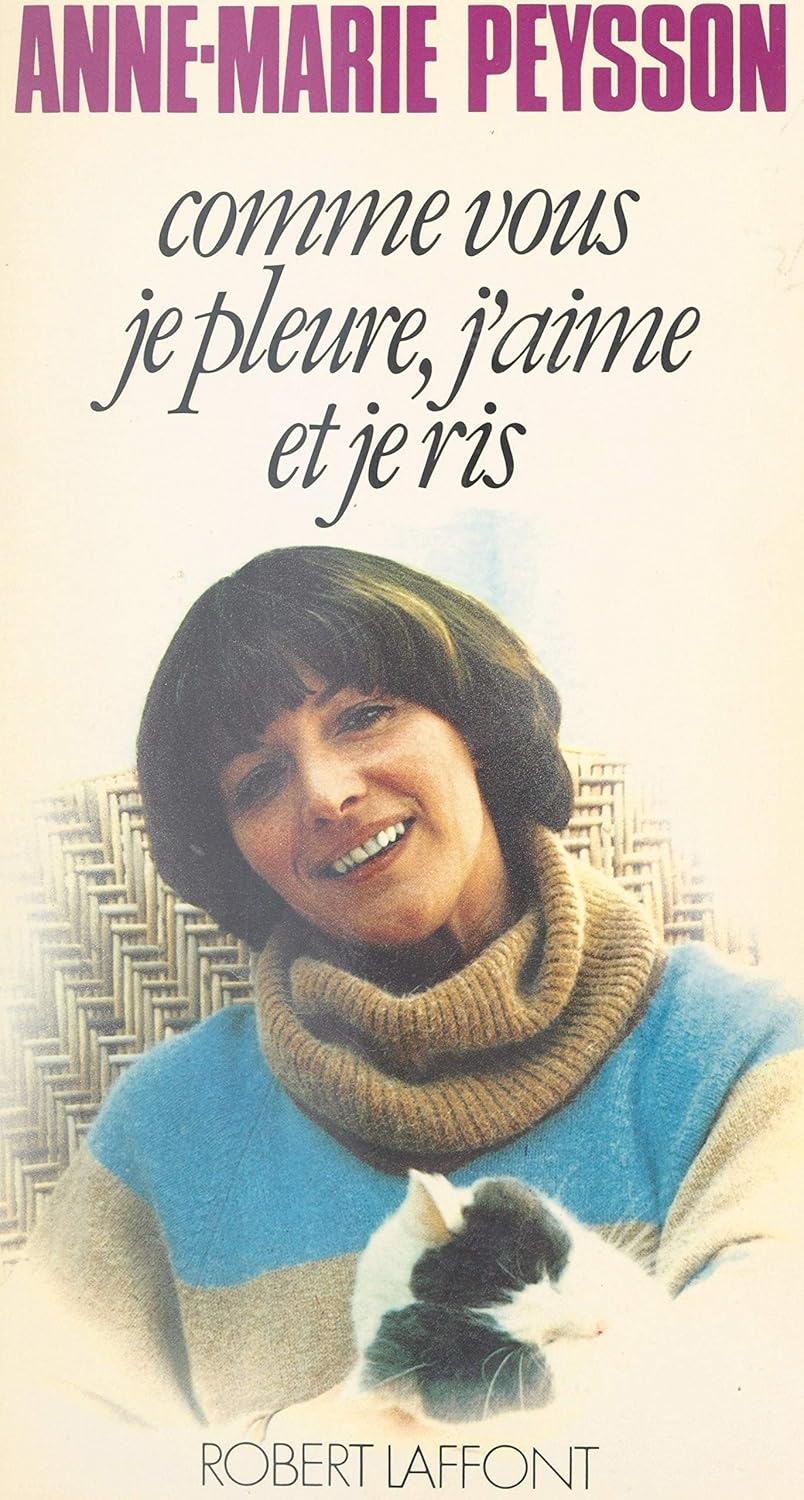
It is undoubtedly Anne-Marie Peysson (1935-2015) who gave the Peysson name its most popular reach in the 20th century. Born in Saint-Disdier in the Hautes-Alpes and raised in Marseille, at 19 years old, in 1954, she entered an RTF television announcer competition — two days before a baccalaureate exam she would never sit — and immediately won over the jury chaired by Marcel Pagnol with her liveliness and natural charm.
Television announcer and then host at the ORTF (where she co-hosted Le Palmarès des chansons with Guy Lux from 1965 to 1968), she joined RTL in 1968 and became one of the most beloved voices on French radio. Her show Parlez-moi d'amour, followed every morning by four million listeners, and Les auditeurs ont la parole — described by RTL as "the first call-in show on radio" — marked an entire generation. Author of the best-seller 1001 trucs et astuces de nos grands-mères, she was also the first radio and television host ever to appear on the cover of Télé Star magazine, in October 1976. The book we are featuring here, Comme vous, je pleure, j'aime et je ris (1978), is her moving autobiography.
Frédéric Peyson, the Montpellier painter, pupil of Ingres
In the 19th century, under the variant spelling Peyson, another bearer of the name left a lasting mark on French artistic heritage. Frédéric Peyson (1807-1877), born in Montpellier, lost his hearing at the age of two following a serious illness. Sent at the age of ten to the Institution Abbé de l'Épée in Paris — France's first school for deaf children — he discovered drawing as his privileged means of communication.
His talent was such that he entered the École nationale supérieure des Beaux-Arts in Paris in 1826, where he became the pupil of the greatest masters of his time: Antoine-Jean Gros, Léon Cogniet, Louis Hersent and above all Jean-Auguste-Dominique Ingres. Three times a finalist for the Prix de Rome (1834, 1835, 1836), he signed his canvases "Peyson sourd-muet" ("Peyson deaf-mute") and exhibited religious subjects, troubadour scenes and portraits of rare delicacy at the Salon. Several of his works — notably Famille de bohémiens (1844), Marguerite de Bourgogne and his Self-portrait of 1849 — are now held at the Musée Fabre in Montpellier. A street in Montpellier still bears his name.
Jean-André Peyssonnel, the doctor who discovered the nature of coral
Even further back, the Marseille branch of the name — spelled Peyssonnel — gave science one of its most remarkable figures of the Age of Enlightenment. Jean-André Peyssonnel (1694-1759), born in Marseille, a physician and naturalist, first distinguished himself during the great plague of 1720 when, like his father Charles, he gave himself selflessly to the patients at the Hôtel-Dieu — for which he earned an annual pension from King Louis XV.
But it was through his research on coral that he entered the history of science. During study voyages along the Mediterranean and Caribbean coasts, he demonstrated in 1750 — against the unanimous opinion of the botanists of his time who held it to be a plant — that coral in fact belonged to the animal kingdom. His discovery, presented to the Royal Society of London in 1752 by William Watson, was only belatedly recognised in France; Buffon eventually paid him tribute in his Natural History, writing: "Peyssonnel had observed and recognised for the first time that corals owed their origin to animals". A red algae, Peyssonnelia, today bears his name, as does a street in Marseille and another in Aix-en-Provence.
A surname, a land, a memory
To bear the name Peysson today is to inherit a lineage rooted in the south of France, where the langue d'oc, the trades of the water and the generosity of men shaped a surname that is both rare and luminous. From the host who made France laugh and cry, to the deaf-mute painter who befriended Victor Hugo, from the doctor who saved Marseille from the plague to the naturalist who revealed the secrets of coral, the Peysson have each in their own way marked the cultural, artistic and scientific history of France.